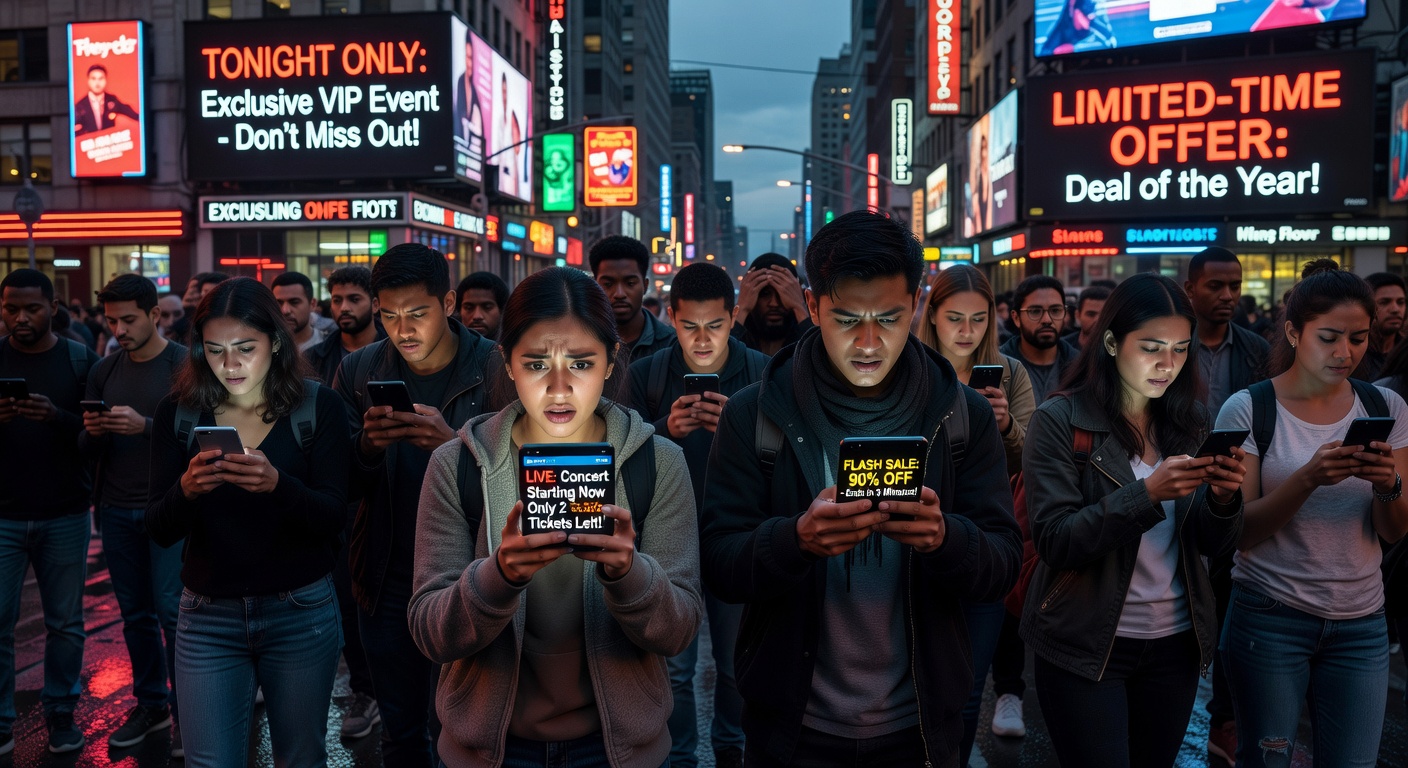
In a world where the average person encounters between 6,000 and 10,000 advertisements per day — and scrolls through approximately 300 feet of content on their phone — the first moment of contact between your content and a reader's attention is not merely important. It is everything. A hook is not decoration. It is the psychological mechanism by which you interrupt the automatic, habitual state of scrolling and force the brain into engaged processing mode.
Understanding why hooks work is the difference between guessing and engineering attention. And attention, in the modern media environment, is the most valuable commodity on earth.
The Psychology of Pattern Interruption
The human brain is a prediction machine. Neuroscientist Karl Friston's theory of the predictive brain describes how our minds are constantly generating models of what will happen next, using past experience to minimize surprise. When stimuli match expectations, the brain processes them on autopilot — the scroll continues, the eyes glide past, the content is functionally invisible.
A hook works precisely because it violates the prediction. This is called pattern interruption: a stimulus that deviates sharply enough from expectation to trigger the brain's orienting response — a sudden shift of attentional resources toward the anomaly. Pattern interruption explains why contrarian headlines outperform safe ones, why a sudden cut to silence in a podcast commands more attention than consistent speech, and why a white background in a sea of colorful thumbnails can stop a scroll cold.
The key insight is that pattern interruption must be relevant. Shock for its own sake produces a spike of attention followed immediately by disengagement. The best hooks interrupt a pattern and then immediately pay off with something that rewards the viewer for stopping.
"The hook is not the beginning of a story. It is a promise — a contract with the audience that the next few minutes of their life will be worth surrendering."
The Curiosity Gap: Engineering the Need to Know
In 1994, behavioral economist George Loewenstein published a theory that would reshape content strategy decades later: the information gap theory of curiosity. Loewenstein argued that curiosity is not simply a desire for knowledge, but a response to a perceived gap between what we know and what we want to know. The discomfort of this gap motivates us to seek closure.
Skilled content creators exploit this mercilessly. When Buzzfeed popularized the "You won't believe what happened next" format, they were crudely weaponizing the curiosity gap. The reason it worked — at first — is because the gap was real enough to create genuine tension. The reason it eventually failed is because audiences learned the gap was artificial; the promised resolution rarely justified the click.
Sophisticated curiosity gap construction involves three elements: establishing a specific piece of known information, hinting at a specific unknown that connects to it, and making the audience feel that the unknown is within reach. Vague gaps produce mild curiosity. Precise, concrete gaps produce compulsive engagement.
For written content, this means your first sentence should never be a summary. It should be a door ajar — enough to see light inside, not enough to see the room. For video, it means starting in the middle of action or revelation, then pulling back to establish context.
The First 3 Seconds in Video
Mobile video consumption has made three seconds the standard unit of judgment. On Instagram Reels and TikTok, the algorithm actively tracks whether viewers make it past the third second — this retention metric directly influences distribution. On YouTube, audience retention in the first 30 seconds determines whether a video is promoted or buried.
In those first three seconds, the brain is asking a single question: Is this for me? The question is not conscious; it is an automatic assessment of relevance cues. These cues include the speaker's energy and body language, the visual aesthetic, the opening words, and most critically, the implied promise of the content.
High-performing video hooks typically fall into one of three categories: the bold claim (stating something surprising or counterintuitive immediately), the mid-action open (starting in the physical or emotional middle of a story), or the direct address challenge (asking a specific question that the target audience is actively wrestling with). All three bypass the brain's skip reflex by triggering a "wait, what?" response before the audience consciously decides whether to continue.
The First Line in Written Content
For long-form written content — articles, newsletters, essays — the first line carries a weight that most writers underestimate. The publishing adage that "the first sentence sells the article, the last sentence sells the next one" remains as true in the era of digital scrolling as it was in the golden age of magazines.
Consider the structural options. A scene-setter drops the reader into a vivid, specific moment: "It was 2 a.m. and the content strategist was staring at a blank draft, deadline in four hours, when she finally understood why her hooks kept failing." A contrarian declaration states something the audience believes to be false or challenges a widespread assumption. A data point with an emotional frame grounds an abstract truth in a number that creates immediate context for why this matters.
What virtually never works as an opener: a definition, a rhetorical throat-clearing ("In today's digital landscape..."), or a statement so broad it could apply to any content about anything. These openers tell the brain's pattern-recognition system that this content is generic — and generic content gets skipped.
The Open Loop Narrative Technique
Television showrunners have long understood a concept that content creators are only recently beginning to apply systematically: the open loop. An open loop is a story element that is deliberately left unresolved, creating cognitive tension that the audience must relieve by continuing to consume.
The technique exploits what psychologist Bluma Zeigarnik discovered in 1927: that incomplete tasks are remembered far better than completed ones. The brain continues to allocate processing resources to unfinished cognitive work, generating a low-level but persistent sense of incompleteness. In content terms, this means that questions posed early in a piece should not be answered early. Conflict introduced at the start should simmer throughout. The thread of "but why did that happen?" should be sustained through multiple sections before the resolution arrives.
Successful podcasts use open loops brilliantly — a host will mention at the very beginning that something unexpected happened at the end of the recording session, then return to it only in the final minutes. The audience stays, not because every intervening minute is brilliant, but because the open loop demands closure. The same principle can be embedded in articles, email sequences, video series, and even individual social media threads.
"An open loop is not a trick. It is a story promise — and like all promises, it must be kept. The payoff must equal or exceed the tension that preceded it."
The Role of Conflict in Sustained Attention
Story theorist Robert McKee identifies conflict as the fundamental engine of narrative. Not conflict in the crude sense of argument or violence, but conflict as the presence of meaningful obstacles between a protagonist and a goal. In content terms, the "protagonist" can be the audience themselves, an idea seeking acceptance against prevailing assumptions, or a subject navigating a challenge.
Conflict sustains attention because it activates anticipatory anxiety — the slight tension we feel when we don't know how a situation will resolve. Brain imaging studies have shown that this state increases dopamine signaling, which drives motivation to continue seeking. Content that has no conflict — that simply delivers information without any tension about whether the information will succeed, be challenged, or prove surprising — produces engagement curves that slope gently downward from the very first moment.
Even educational content benefits from embedded conflict. Framing a tutorial as "most people approach this wrong, and here is why it keeps failing them" before revealing the correct method creates low-stakes narrative tension that holds attention far more effectively than a neutral presentation of correct technique.
Cliffhangers Across Platforms
The platform determines the anatomy of the cliffhanger. On YouTube, the cliffhanger lives in the thumbnail and title — an image that implies a result the viewer hasn't yet witnessed, combined with a title that withholds the key piece of information. On TikTok, the cliffhanger is often structural: "Part 1" messaging or a video that cuts mid-action. In newsletters, it's the teaser at the bottom of one issue about what's coming in the next. In podcast series, it's the episode-ending question that reframes everything the listener just heard.
What all platform-specific cliffhangers share is that they are calibrated to the consumption behavior of that platform. Short-form video audiences respond to visual and emotional immediacy. Long-form readers respond to intellectual unresolved questions. Newsletter subscribers respond to personal narrative threads left incomplete. Understanding where your audience is and how their attention behaves there is prerequisite to engineering effective cliffhangers.
5 Hook Formulas That Work
-
The Contrarian Opener
State the opposite of received wisdom in your niche, without hedging. Forces pattern interruption by violating a prediction the audience held as stable.
Example: "Posting consistently is probably hurting your growth — here is why." -
The Specific Curiosity Gap
Name a specific outcome or revelation without explaining how you got there. The gap between the known (the outcome) and the unknown (the mechanism) creates irresistible pull.
Example: "This one structural change cut our article bounce rate by 43% in 11 days." -
The Vivid Scene Drop
Open in the physical or emotional middle of a story that has stakes. No setup, no context — the reader is dropped in and must keep reading to understand where they are.
Example: "She had spent four months building the campaign. The launch went live at 9 a.m. By noon, she wished it hadn't." -
The Shared Pain Point
Name a specific frustration, failure, or confusion your audience experiences so precisely that they feel seen. Identification creates an instant bond and commitment to the rest of the piece.
Example: "You write for an hour. You post. You wait. And the silence is somehow worse than a bad reaction." -
The Stakes Elevation
Open by making clear what is at risk if the audience does not engage with this information — but make the stakes real and specific rather than vague and catastrophic.
Example: "Most creators reach their content ceiling by month six and never diagnose why. This is what is happening in those final weeks before the plateau."
How Different Platforms Require Different Hook Styles
No single hook style works everywhere, and applying a hook designed for one platform to another is one of the most common content mistakes. The differences are structural, not cosmetic.
On TikTok and Instagram Reels, the hook is primarily visual and sensory. Viewers decide within a single second whether to swipe. Energy, movement, contrast, and an unexpected visual element all serve as hooks before a single word is spoken. The verbal hook, when it arrives, should reinforce the visual hook — not replace or contradict it.
On YouTube, audiences have longer patience but higher expectations of depth. Hooks here work best when they establish a clear thesis or question in the first 15–30 seconds and signal the kind of transformation or insight the viewer can expect by the end. The visual hook (thumbnail + title) has already gotten them to click — the first 30 seconds must justify that click.
In newsletters and long-form articles, the hook must work entirely in text, without the assistance of visuals, sound, or movement. This demands more precise language, more specific detail, and stronger emotional specificity. A newsletter hook that relies on vague emotional language will lose readers to competing content before the second paragraph.
In podcasts, the hook is almost entirely relational. Audiences are listening while commuting, exercising, cooking — multi-tasking in a way that means their attention can detach and re-attach. The strongest podcast hooks establish an interpersonal contract: the host signals not just what they will discuss, but who they are and why the listener should trust them to guide the conversation.
The craft of the hook is ultimately the craft of understanding your audience's attention — where it starts, how quickly it shifts, what interrupts it, and what sustains it. Master this, and the rest of content strategy becomes significantly simpler.