Home
Psychology Topics
Attention Psychology Dopamine Loops Social Proof Emotional Triggers Retention Mechanics Cognitive Biases Visual Psychology Narrative Psychology Community Behavior Blog Resources About Contact

Research Library & Resources

A curated collection of foundational books, key research papers, analytical tools, and essential vocabulary for students and practitioners of content psychology.

🔍

Learning at the Intersection of Mind and Media

Content psychology draws on behavioral economics, cognitive neuroscience, social psychology, and media studies. The resources in this library represent the most rigorous and practically relevant scholarship across all of these disciplines.

Whether you are approaching this field as a researcher, a strategist, a creator, or simply someone curious about how and why digital content works, these materials provide the conceptual foundations that separate guesswork from evidence-based practice.

Use the search bar above to filter across all sections simultaneously, or browse each section individually below.
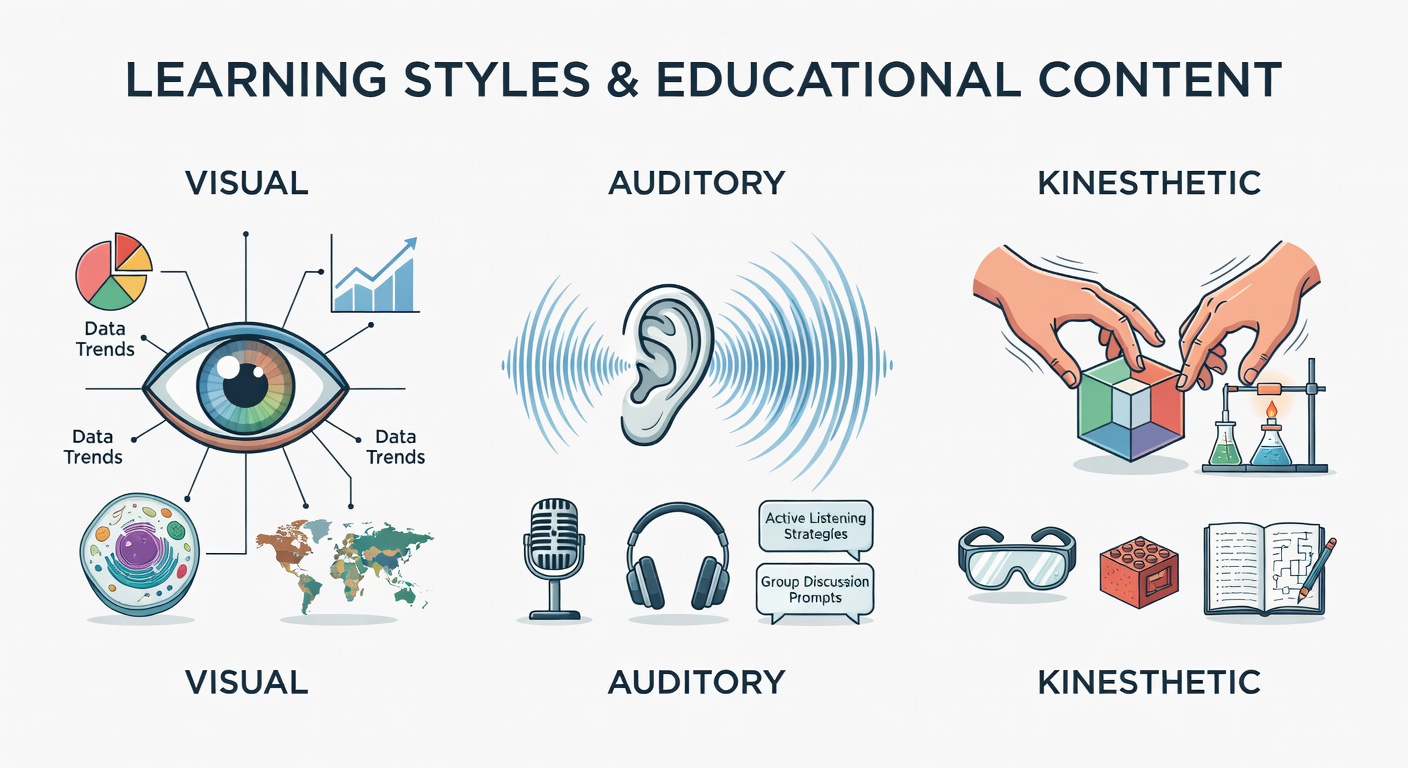

Learning Styles and Resources

Foundational Books

8 essential reads for understanding persuasion, behavior, and content psychology

No books match your search.

Influence: The Psychology of Persuasion

Robert B. Cialdini
1984 · Psychology / Marketing

The definitive text on the science of persuasion. Cialdini identifies six principles — reciprocity, commitment, social proof, authority, liking, and scarcity — that underlie virtually all influence attempts. Required reading for anyone working in content strategy.

Thinking, Fast and Slow

Daniel Kahneman
2011 · Behavioral Economics

Nobel laureate Kahneman synthesizes decades of research into the two systems of human cognition — fast intuitive thinking (System 1) and slow deliberate reasoning (System 2). Essential for understanding how audiences actually process content.

Contagious: Why Things Catch On

Jonah Berger
2013 · Viral Marketing

Berger's STEPPS framework — Social Currency, Triggers, Emotion, Public, Practical Value, Stories — provides a rigorous and empirically grounded explanation for why some content spreads widely while nearly identical content disappears.

Hooked: How to Build Habit-Forming Products

Nir Eyal
2014 · Product Psychology

Eyal's Hook Model — Trigger, Action, Variable Reward, Investment — explains how platforms and products create habitual user behavior. Understanding this model is essential for both designing engaging content and recognizing when design becomes manipulation.

Made to Stick: Why Some Ideas Survive

Chip Heath & Dan Heath
2007 · Communication

The Heath brothers' SUCCESs framework (Simple, Unexpected, Concrete, Credible, Emotional, Story) decodes why certain ideas are remembered and shared while others are forgotten. Foundational for content writers and communicators of all kinds.

The Paradox of Choice

Barry Schwartz
2004 · Decision Science

Schwartz demonstrates that increasing options does not increase satisfaction — it increases anxiety and paralysis. Critical reading for content strategists designing navigational structures, CTAs, and information architecture.

Pre-Suasion

Robert B. Cialdini
2016 · Behavioral Science

Cialdini's follow-up to Influence examines how what happens before a persuasive message shapes its reception. The concept of "privileged moments" — how priming attention toward certain ideas makes related suggestions more effective — is directly applicable to content sequencing.

Predictably Irrational

Dan Ariely
2008 · Behavioral Economics

Ariely documents the systematic, predictable irrationalities of human decision-making across dozens of original experiments. His work on the power of "free," social vs. market norms, and ownership bias has direct implications for content monetization and audience relationship-building.

Key Research Papers

Peer-reviewed scholarship that underpins evidence-based content psychology

No papers match your search.

Social Networks

Experimental Evidence of Massive-Scale Emotional Contagion Through Social Networks

Kramer, A.D.I., Guillory, J.E., & Hancock, J.T.
Proceedings of the National Academy of Sciences, 2014

The landmark (and controversial) Facebook study demonstrating that exposure to emotionally valenced content in the news feed influences users' own emotional expression, providing direct empirical evidence of algorithmic emotional influence at scale.

Cognitive Biases

Judgment Under Uncertainty: Heuristics and Biases

Kahneman, D. & Tversky, A.
Science, Vol. 185, 1974

The foundational paper establishing that human judgment relies on cognitive heuristics that produce systematic and predictable errors. Introduced anchoring, availability, and representativeness as the primary mechanisms of intuitive judgment — the bedrock of behavioral science.

FOMO

Motivational, Emotional, and Behavioral Correlates of Fear of Missing Out

Przybylski, A.K., Murayama, K., DeHaan, C.R., & Gladwell, V.
Computers in Human Behavior, 29(4), 2013

The first large-scale empirical examination of FOMO as a psychological construct, establishing its relationship to fundamental needs for competence, autonomy, and relatedness, and its association with social media engagement and wellbeing outcomes.

Narrative

The Role of Transportation in the Persuasiveness of Public Narratives

Green, M.C. & Brock, T.C.
Journal of Personality and Social Psychology, 79(5), 2000

Establishes narrative transportation — the experience of being "lost in a story" — as the primary mechanism by which stories change beliefs and attitudes. Higher transportation correlates with greater persuasive effect and reduced counterarguing, with significant implications for content strategy.

Attention

The Attention Economy and the Net

Goldhaber, M.H.
First Monday, Vol. 2, No. 4, 1997

The prescient essay that first characterized attention as the scarce resource of the information economy. Goldhaber's core insight — that in an information-rich world, the bottleneck is human attention, not content supply — remains the foundational frame for understanding digital media dynamics.

Exposure Effect

Attitudinal Effects of Mere Exposure

Zajonc, R.B.
Journal of Personality and Social Psychology Monograph, 9(2), 1968

The classic experimental demonstration that repeated exposure to a stimulus increases preference for it, even without conscious recognition or reinforcement. This "mere exposure effect" underlies brand familiarity, creator loyalty, and the advantage of consistent content cadence.

Data & Metrics

Understanding and applying engagement analytics in content psychology research

User Engagement Metrics Chart

Quantifying Psychological Engagement

The challenge of content psychology research is translating subjective psychological experience into observable, measurable behavior. Digital analytics platforms have made this translation easier than at any previous point — but also more prone to misinterpretation.

Engagement metrics like watch time, scroll depth, click-through rate, and return visits are behavioral proxies for psychological states — curiosity, absorption, satisfaction, and desire for more. They are imperfect proxies, and treating them as direct measures of psychological engagement leads to optimization decisions that can improve numbers while degrading actual experience.

The most rigorous content psychology research combines behavioral metrics with survey-based measures of psychological states, A/B testing of specific psychological mechanisms, and qualitative analysis of audience response. Key analysis tools include:

  • Heatmap and scroll-depth analysis for attention mapping
  • Session recording tools for behavioral sequence analysis
  • Cohort analysis for retention pattern identification
  • Sentiment analysis of comments and social response
  • Survey integration for direct psychological state measurement

Online Tools

Analytics and research platforms for content psychology practitioners

No tools match your search.

📈

Google Analytics 4

The industry-standard web analytics platform. GA4's event-based model allows custom tracking of psychologically meaningful user behaviors — scroll thresholds, reading completion, return visits, and multi-session engagement patterns.

👁

Hotjar

Visual behavior analytics combining heatmaps, scroll maps, and session recordings. Invaluable for studying where attention concentrates on a page, where it drops, and where cognitive friction causes disengagement — real-world attention psychology in action.

🗣

Brandwatch

Enterprise-grade social listening and audience intelligence platform. Enables large-scale sentiment analysis, emotional response tracking, and conversation pattern research across social platforms — critical for studying how content triggers emotional and social responses at scale.

📊

Sprout Social

Social media management and analytics platform with strong audience engagement reporting. Particularly useful for tracking engagement psychology over time — identifying which content types generate sustained engagement versus short spikes, and how posting timing interacts with audience attention patterns.

Glossary of Key Terms

10 foundational concepts in content psychology and behavioral media research

Cognitive Load

The total amount of mental effort being used in working memory at any given time. Cognitive load theory, developed by John Sweller in 1988, distinguishes between intrinsic load (inherent complexity of the material), extraneous load (load created by poor design or presentation), and germane load (load that contributes to learning and schema formation). Content designed to minimize extraneous cognitive load — through clear structure, familiar visual conventions, and appropriately chunked information — performs better across virtually all engagement metrics.

Dopamine Loop

A pattern of behavior driven by the dopaminergic reward system, in which anticipation of reward (rather than reward itself) drives engagement. Variable reward schedules — where the ratio and timing of rewards is unpredictable — produce the most persistent engagement patterns, a principle B.F. Skinner established in operant conditioning research. Social media platforms exploit dopamine loops through unpredictable notification delivery, variable content quality in feeds, and like counts that arrive at irregular intervals.

Social Proof

The psychological and social phenomenon whereby people assume the actions of others in an attempt to reflect correct behavior in a given situation. Identified as one of Cialdini's six principles of influence, social proof operates most powerfully in conditions of uncertainty, where individuals look to the behavior of others as information about the appropriate response. In content contexts, this manifests as the influence of view counts, testimonials, follower numbers, and visible sharing behavior on individual engagement decisions.

Parasocial Relationship

A one-sided emotional relationship in which an audience member feels they know, care about, and have a personal connection with a media persona — despite having no actual interaction with that person. First described by Horton and Wohl in 1956, parasocial relationships are now recognized as the primary driver of creator loyalty, subscription retention, and audience advocacy. Strong parasocial bonds are built through consistent self-disclosure, relational language, direct address, and the demonstration of genuine personality over time.

Narrative Transportation

The experience of being mentally "absorbed" into a narrative world, characterized by reduced awareness of the real environment, emotional engagement with characters, and the creation of vivid mental images of story events. Narrative transportation is the psychological mechanism through which stories change beliefs — highly transported readers and viewers show reduced counterarguing and greater adoption of perspectives presented in the narrative, even when those perspectives are explicitly fictional.

Variable Reward Schedule

A reinforcement schedule in which rewards are delivered at unpredictable intervals and quantities. B.F. Skinner's research demonstrated that variable ratio reinforcement — where the number of responses required for reward is unpredictable — produces the highest rates of response and the greatest resistance to extinction. This principle underlies the design of slot machines, social media feed algorithms, and notification systems, all of which deliver uncertain but possible rewards at every engagement, driving compulsive checking behavior.

Confirmation Bias

The tendency to search for, interpret, favor, and recall information in a way that confirms or supports one's prior beliefs or values. Confirmation bias is one of the most extensively documented cognitive biases in the psychological literature, affecting interpretation, memory, and attention allocation. In digital media contexts, confirmation bias interacts with algorithmic personalization to produce filter bubbles and echo chambers, in which audiences are systematically exposed to content that confirms their existing worldview while relevant counterevidence is algorithmically deprioritized.

Emotional Valence

The intrinsic attractiveness (positive valence) or aversiveness (negative valence) of an emotional response — the "feeling tone" along the pleasant-to-unpleasant dimension. In content psychology, emotional valence is a key predictor of sharing behavior: research by Jonah Berger and Katherine Milkman found that high-arousal positive emotions (awe, amusement) and high-arousal negative emotions (anxiety, anger) both predict virality, while low-arousal emotions (sadness, contentment) do not. Emotional valence interacts with arousal level to determine the behavioral response an emotion triggers.

Heuristic

A mental shortcut or rule of thumb that the brain uses to make rapid judgments and decisions with minimal cognitive effort. Heuristics are generally adaptive — they produce good-enough decisions most of the time, allowing efficient navigation of a complex world. However, they produce systematic errors (biases) in specific circumstances. Content psychology is largely concerned with understanding which heuristics are activated by different content designs, and how creators can leverage or mitigate their effects.

Schema Theory

The theory, developed through the work of Frederic Bartlett and later elaborated by cognitive psychologists, that knowledge is organized in the brain as structured frameworks (schemas) built from prior experience. New information is interpreted through existing schemas, and memories are reconstructed using schema-consistent assumptions. For content creators, schema theory explains why content that fits familiar structures and formats is processed more easily and remembered better — and why violating schema expectations, when done deliberately, can create powerful moments of attention and memorability.

Stay Current with Weekly Research

Every Thursday, our research team curates the most relevant new findings in content psychology, behavioral media studies, and digital attention research. No noise — just the work that matters.

One email per week. Unsubscribe at any time. No spam, ever.