When uncertain about the correct course of action, human beings look to other people for guidance. This is not a cognitive weakness — it is one of the most adaptive heuristics our species has developed. In a world of limited time and incomplete information, the behavior of others provides powerful probabilistic evidence about what is valuable, safe, and true.
Cialdini's Principle of Social Proof
Robert Cialdini, the Arizona State University psychologist whose 1984 book Influence: The Psychology of Persuasion became one of the most widely read works in behavioral science, identified social proof as one of six universal principles of influence. His definition: "We determine what is correct by finding out what other people think is correct."
"In general, when we are unsure of ourselves, when the situation is unclear or ambiguous, when uncertainty reigns, we are most likely to look to and accept the actions of others as correct." The implication for digital content is stark: algorithmic feeds and engagement metrics have made "what others are doing" more visible than at any previous point in human history.
The evolutionary basis for social proof is grounded in game theory and survival heuristics. For most of human prehistory, individual information-gathering was costly and dangerous. Observing the behavior of trusted group members — following them to food sources, avoiding places where others expressed fear — provided a reliable shortcut. The brains that evolved to do this efficiently survived. We are their descendants, and those same neural circuits are active when we check view counts and star ratings.
In digital content environments, social proof operates through explicit signals (view counts, subscriber numbers, review scores) and implicit ones (the trending label, the "popular in your network" cue, the speed of share velocity). Understanding the full taxonomy of social proof types is essential for content creators who want to deploy this principle effectively and responsibly.
6 Types of Social Proof
Social proof is not monolithic. Research and practice have identified at least six distinct varieties, each drawing on different trust mechanisms and appropriate for different content contexts.
Expert Social Proof
Endorsement or validation from credentialed authorities in a relevant field. Draws on the authority heuristic in combination with social proof.
Celebrity Social Proof
Association with famous figures who may or may not have relevant expertise. Powerful due to parasocial relationships and aspirational identification.
User Social Proof
Reviews, ratings, and testimonials from ordinary users. Highly persuasive because it overcomes the credibility gap of brand communication.
Wisdom of Crowds
Large aggregate numbers — view counts, download figures, subscriber milestones — that signal broad population endorsement.
Wisdom of Friends
The most persuasive form: endorsement from people you know personally. Social media sharing functions as systematic wisdom-of-friends distribution.
Certification Proof
Third-party verification marks, platform badges (verified checkmarks, bestseller labels), and award indicators that signal institutional endorsement.

Numbers as Social Proof
Numerical social proof is the most visible and quantified form. View counts, subscriber numbers, follower tallies, download figures, and like counts all function as real-time population polls that audiences use to rapidly assess content quality before investing time.
The psychological mechanism behind numerical social proof is informational: large numbers reduce perceived risk by indicating that many prior consumers found the content or product sufficiently valuable to engage with it. However, this heuristic is also vulnerable to manipulation, which is why platform policies increasingly target engagement fraud and why authenticity — genuine engagement from real audiences — has become a core differentiator.
A critical nuance: numbers matter relative to context, not absolutely. A newsletter with 8,000 highly engaged subscribers in a narrow specialist field may carry more social proof credibility within that community than a generalist account with 500,000 passive followers. Content creators should frame their numbers in ways that convey the signal most relevant to their specific audience's trust calculus.
Testimonials and Reviews: The Psychology of Stranger Trust
One of the most striking aspects of social proof is that it routinely functions across the trust normally reserved for close relationships. We adjust our behavior based on the reported experiences of complete strangers — a phenomenon that would have seemed bizarre to our ancestors but is now central to trillions of dollars of economic activity.
This changed how I think about content strategy entirely. Within three months of applying these principles, my newsletter open rates went from 18% to 41%.
Research by Kim and Gupta (2012) showed that consumers attribute more diagnostic value to reviews that provide specific, detailed information than to generic praise — even when the specific reviews are less positive overall. The implication: a testimonial saying "It helped me improve by X% in Y weeks" is more persuasive than "Amazing! Highly recommend!" Despite what intuition might suggest, precision signals authenticity.
Negative reviews present a paradox: moderate inclusion of critical feedback actually increases conversion, because an all-positive profile is perceived as curated or inauthentic. Research from the PowerReviews group found that purchase likelihood peaked when overall ratings fell between 4.2 and 4.5 out of 5 — not at a perfect 5.0.
Influencer Psychology and Parasocial Relationships
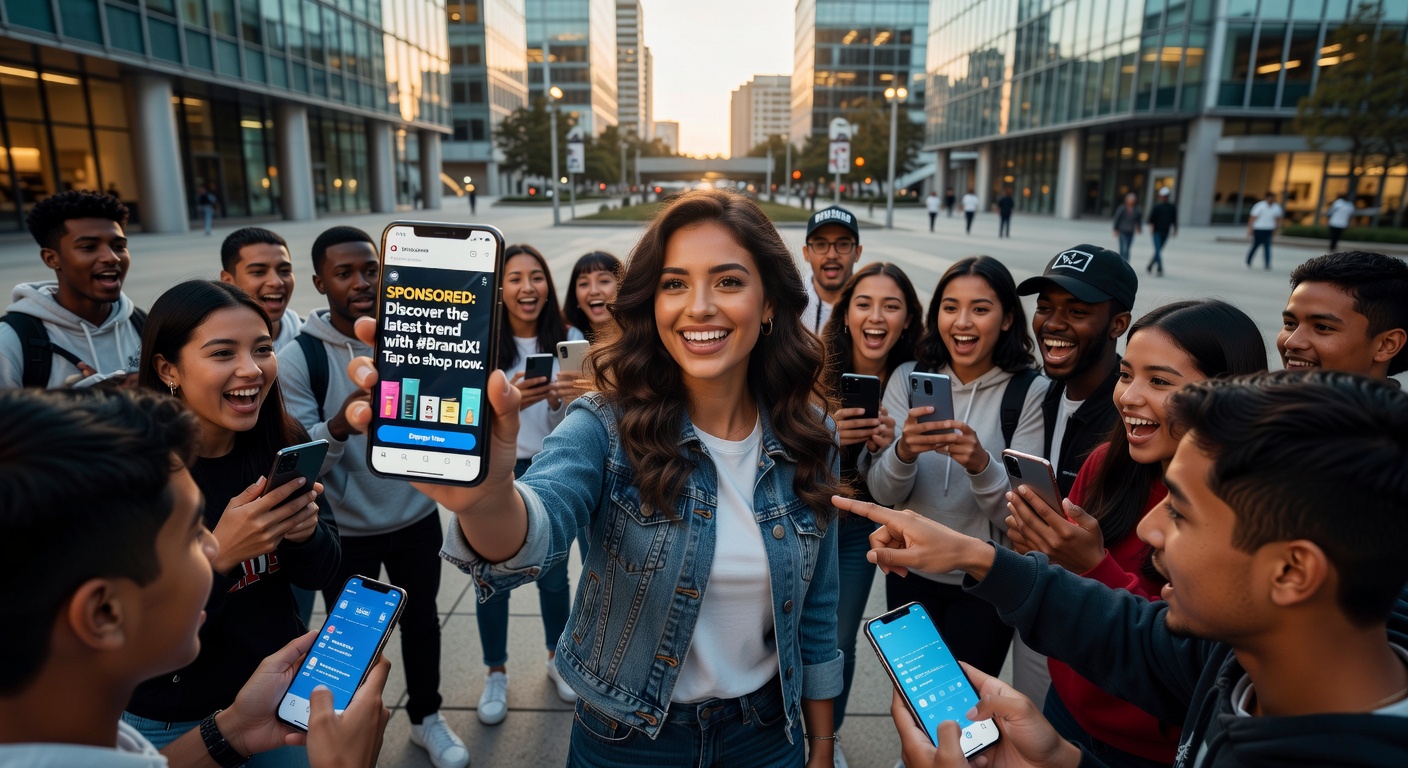
The concept of parasocial interaction was first described by Horton and Wohl in 1956 to describe the one-sided intimacy viewers develop with television personalities. Audiences develop feelings of friendship, loyalty, and personal connection with media figures who have no awareness of their individual existence. In the digital era, this phenomenon has scaled dramatically and become the economic foundation of the influencer industry.
The Bandwagon Effect
The bandwagon effect describes the tendency for individual behavior and belief to converge with perceived majority positions — a phenomenon that operates even when individuals are aware of it and would prefer to resist it. Research by Asch (1951) in the famous conformity experiments demonstrated that a significant portion of participants would publicly report an obviously incorrect visual judgment if surrounded by confederates who agreed on the wrong answer.
In content consumption, the bandwagon effect manifests as cascading virality: once content reaches a critical threshold of visible sharing and engagement, social proof itself becomes the primary driver of further distribution. The content's quality becomes secondary to the signal that "everyone is watching this." Platforms explicitly engineer for these cascade effects through trending algorithms that surface content once it achieves initial viral velocity.
The implication for content creators is that early engagement matters disproportionately. A video that achieves strong engagement in its first four hours will receive algorithmic amplification that compounds this advantage. Strategies that concentrate early audience attention — email newsletters to existing audiences, community posts before public release, exclusive early access — are rational responses to this cascade dynamic.
FOMO as Social Proof
Fear of Missing Out (FOMO) — a form of social anxiety rooted in the perception that others are having rewarding experiences from which one is absent — functions as a specific and particularly potent variety of social proof. The "Trending Now" label on a streaming platform is pure FOMO-as-social-proof: the reward signal is not the content itself but the desire to be part of a shared cultural moment.
-
Trending labels and real-time rankings Platforms that surface "#1 trending in your country" or "Most watched this week" activate FOMO by creating an explicit social reference: everyone else is watching this, and you are not yet among them.
-
Time-limited social events Live streams, limited-time content drops, and simultaneous community viewing experiences create urgency by converting passive content consumption into a social event with a temporal boundary.
-
Conversation-driven FOMO When content generates heavy social media discussion, the conversation itself becomes social proof. The desire to participate in a cultural conversation without having consumed the source content is a powerful driver of engagement.
-
Exclusive community signals Early access programs, members-only content, and insider newsletters leverage FOMO by creating visible distinctions between those who have access and those who do not.
A 2013 study by Przybylski et al. at the University of Oxford provided the first rigorous psychological characterization of FOMO, defining it as "a pervasive apprehension that others might be having rewarding experiences from which one is absent." Their research found that FOMO was associated with lower levels of basic psychological need satisfaction — autonomy, competence, and relatedness — suggesting that its power derives partly from pre-existing social anxiety rather than being purely situationally induced.
Key Takeaways
- Social proof is an evolutionarily adaptive heuristic, not a cognitive flaw — the information environments of prehistory made observing others' behavior a reliable signal of value and safety.
- Six distinct types of social proof (expert, celebrity, user, crowd, friends, certification) operate through different trust mechanisms and are appropriate for different content contexts and audience relationships.
- Parasocial relationships are the foundation of influencer effectiveness — trust derives from perceived intimacy and consistency, not follower count or production quality.
- The bandwagon effect means early engagement is disproportionately valuable — content that achieves initial critical mass receives algorithmic amplification that compounds advantage.
- FOMO-as-social-proof converts passive viewing into social participation anxiety, and is most powerful when content is framed as a shared cultural moment with a temporal dimension.
Apply These Principles
Lead with specific social proof
Replace vague claims with specific, credible numbers and named individuals. "14,000 content strategists read this newsletter" is dramatically more persuasive than "thousands of professionals trust us."
Cultivate parasocial depth, not breadth
Consistent personal disclosure, direct audience address, and vulnerability-building content create the intimacy that translates to high-trust endorsement power. Prioritize depth of connection over follower count at early stages.
Engineer early engagement windows
Use existing audience channels — email lists, community posts, social announcements — to concentrate engagement in the first hours after publication, triggering algorithmic cascade effects that multiply organic reach.
Create time-bounded community moments
Live events, simultaneous releases, limited-time series, and real-time community discussions convert individual content consumption into shared social experiences — activating FOMO mechanics that dramatically accelerate distribution.
Join 14,000+ Content Strategists
Weekly deep-dives on behavioral psychology, social dynamics, and content strategy — written for creators who want to understand the science, not just the tactics.
References
- Cialdini, R. B. (1984). Influence: The psychology of persuasion. William Morrow and Company.
- Asch, S. E. (1951). Effects of group pressure upon the modification and distortion of judgments. In H. Guetzkow (Ed.), Groups, leadership and men (pp. 177–190). Carnegie Press.
- Horton, D., & Wohl, R. R. (1956). Mass communication and para-social interaction: Observations on intimacy at a distance. Psychiatry, 19(3), 215–229.
- Przybylski, A. K., Murayama, K., DeHaan, C. R., & Gladwell, V. (2013). Motivational, emotional, and behavioral correlates of fear of missing out. Computers in Human Behavior, 29(4), 1841–1848.
- Farivar, S., Wang, F., & Yuan, Y. (2021). Opinion leadership vs. para-social relationship: Key factors in influencer marketing. Journal of Retailing and Consumer Services, 59, 102343.
- Kim, S. J., & Gupta, P. (2012). Psychological distance and adoption of online reviews: Moderating effects of self-construal. Journal of Computer-Mediated Communication, 17(4), 400–413.
- Spiegel Research Center. (2017). How online reviews influence sales. Northwestern University Spiegel Research Center.